
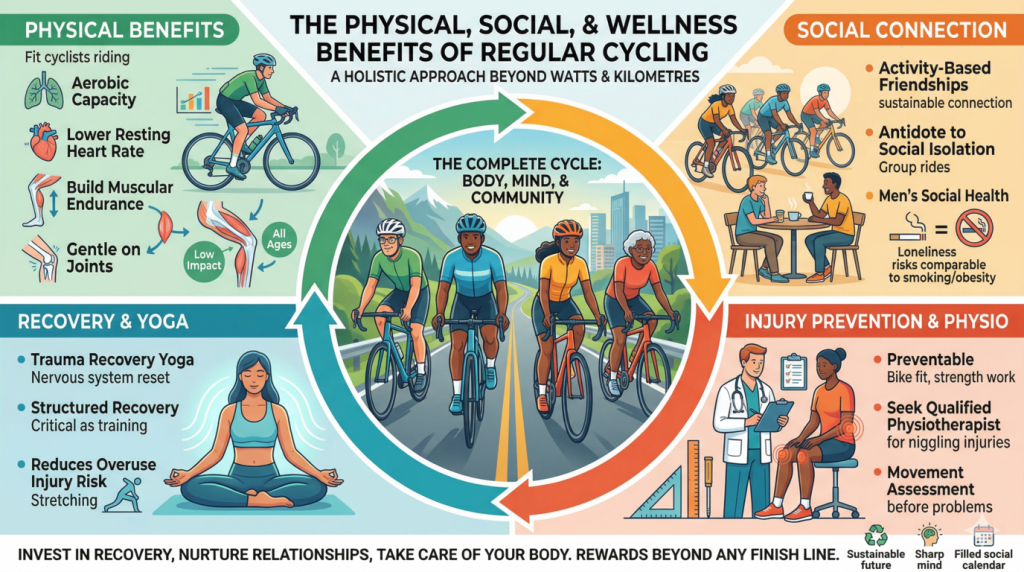
Cycling is one of the most complete activities a person can pursue. It builds cardiovascular fitness, strengthens the legs and core, and — perhaps most importantly — it connects people. Whether you are grinding up a long climb solo or spinning along a bike path with friends, the bicycle has a unique way of integrating physical performance, mental wellbeing, and social connection into a single ride.
The Physical Benefits of Regular Cycling
Regular cycling improves aerobic capacity, lowers resting heart rate, and builds muscular endurance in the quads, hamstrings, and glutes. Unlike high-impact sports, it is gentle on the joints, making it accessible to athletes of all ages and fitness levels. A well-structured training plan — whether you are aiming for your first century ride or chasing a podium — can transform both your body and your relationship with effort.
Recovery is just as critical as the training itself. Athletes dealing with injury, burnout, or chronic stress often find that combining cycling with structured recovery practices accelerates their return to form. Having the right physiotherapy supplies on hand — from compression bandages and sports tapes to hot packs and muscle recovery gels — can make a significant difference in how quickly the body bounces back. Stores like Gulf Physio offer a wide range of professional-grade physiotherapy and sports recovery products, making it easier than ever for cyclists to manage soreness, support soft tissue healing, and reduce the risk of overuse injury between sessions.
The Social Side of Cycling
Ask any committed cyclist what keeps them coming back, and the answer is rarely just the fitness gains. It is the group rides, the café stops, the shared suffering on a tough climb, and the friendships built mile by mile. The social fabric of cycling is one of its most underrated strengths.
This is a truth that resonates well beyond the sport. Research increasingly shows that social connection is a cornerstone of men’s health — not just mentally, but physically. Resources focused on men’s social health and friendship highlight that loneliness carries real health risks comparable to smoking or obesity, and that activity-based friendships — like those formed on the bike — are among the most sustainable and meaningful. Cycling clubs, sportive events, and even casual group rides serve as a powerful antidote to social isolation.
Injury Prevention and Physiotherapy for Cyclists
For all its benefits, cycling is not without its injury risks. Knee pain, lower back strain, IT band syndrome, and neck discomfort are among the most common complaints — and most are preventable with proper bike fit, strength work, and a consistent stretching routine. Stretching before, during, and after a ride plays a significant role in maintaining flexibility, reducing muscle fatigue, and lowering the risk of overuse injuries. A physiotherapist’s guide to effective biking stretches outlines practical movements — from a downward facing dog and hip and lower back stretches before you ride, to high knees and spinal twist stretches in your cooldown — that can make a measurable difference to how your body holds up on the bike. If you are dealing with a niggling injury or want a movement assessment before problems develop, seeking the advice of a qualified physiotherapist is always the smart move.
Putting It All Together
The best cycling life is not just about watts and kilometres. It is about building a sustainable practice that feeds your body, sharpens your mind, and fills your social calendar with people who share your passion. Invest in your recovery, nurture your off-bike relationships, and take care of your body with the same dedication you bring to your training — and the rewards will go far beyond any finish line.