
If you have spent any time reading about cycling training, you have almost certainly come across the term “sweet spot.” It gets mentioned in training plans, coaching articles, and forum discussions constantly — but what does it actually mean, why is it called that, and should you be doing it?
This guide explains sweet spot training from the ground up — no jargon, no assumed knowledge.
What is sweet spot?
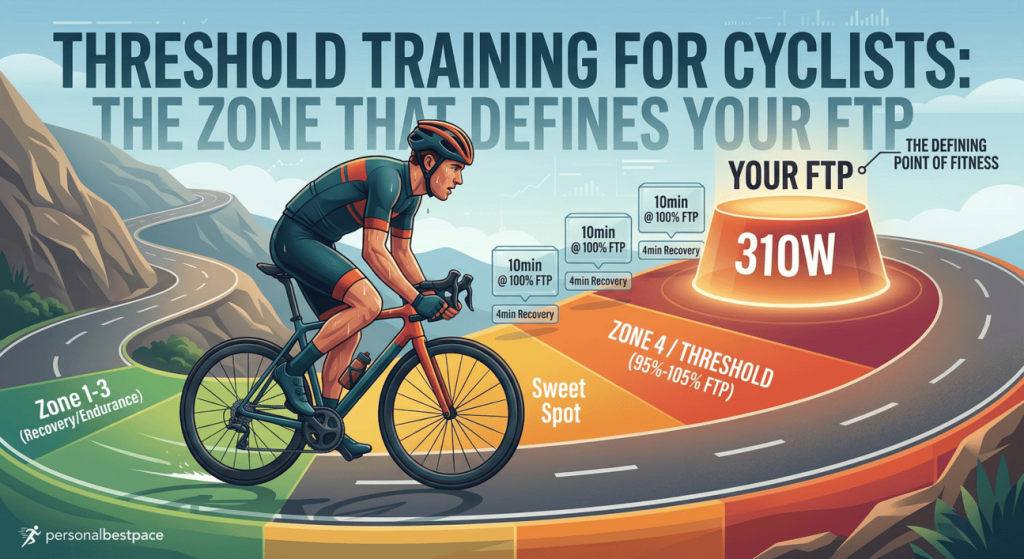
Sweet spot is a specific training intensity zone that sits between tempo pace (Zone 3) and threshold pace (Zone 4). In power terms, it is typically defined as 88% to 93% of your FTP — your Functional Threshold Power, which is roughly the highest average power you can sustain for about an hour.
If your FTP is 200 watts, your sweet spot range is approximately 176 to 186 watts. If your FTP is 280 watts, sweet spot sits between 247 and 261 watts. The exact numbers shift with your fitness — as your FTP rises, so does your sweet spot range.
Why is it called sweet spot?
The name comes from the relationship between training stress and fatigue at this specific intensity. At sweet spot, the amount of aerobic adaptation you produce per hour of training is very high — higher than at easier intensities — while the fatigue you accumulate is significantly less than at full threshold or VO2max efforts.
In other words, you get a lot of fitness bang for your buck without needing two days to recover afterward. That balance — high adaptation, manageable fatigue — is what makes it the “sweet spot” on the training stress curve.
[
What does sweet spot feel like?
Sweet spot effort feels hard but sustainable. Your breathing is noticeably elevated — you can say a few words but not hold a conversation. Your legs will feel the effort, especially toward the end of a long interval, but you should not feel like you are at your absolute limit. If you finish a sweet spot interval gasping and unable to pedal, you went too hard. If you finish and feel like you could have pushed a lot more, you were probably below the zone.
A common description from cyclists is that sweet spot feels like “comfortably uncomfortable” — you are clearly working, but you are in control of the effort.
What does a sweet spot session look like?
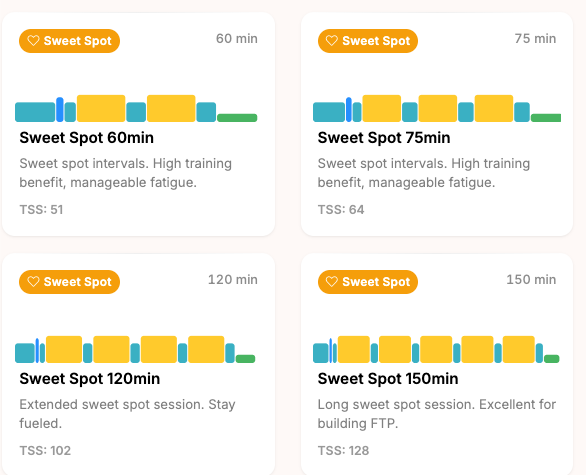
A typical sweet spot workout involves a warmup of 10 to 15 minutes at easy pace, followed by 2 to 4 intervals of 10 to 20 minutes at sweet spot power, with short recoveries of 3 to 5 minutes between each interval, and a cooldown of 10 minutes.
As your fitness improves, the intervals get longer — progressing from 2×10 minutes up to 2×20 minutes or even a single continuous 30 to 40 minute effort. The PersonalBestPace workout library includes Sweet Spot sessions from 60 to 150 minutes, covering a wide range of interval structures for different fitness levels.
What does sweet spot training do for you?
The primary benefit is a higher FTP. Sustained sweet spot training over 6 to 8 weeks reliably raises the power output at which your body can sustain effort without accumulating large amounts of lactate — which is, in practical terms, what it means to get fitter on the bike.
You will also notice improvements in your ability to hold a hard pace for longer on climbs, in fast group rides, and on rolling terrain. Sweet spot builds the kind of fitness that shows up in real riding, not just in lab numbers.
How is sweet spot different from threshold?
Threshold training (Zone 4) targets 95% to 105% of FTP — a notch harder than sweet spot. The key difference is recovery: after a genuine threshold session you typically need 48 hours or more to recover fully. After a sweet spot session most riders recover within 24 to 36 hours, which means you can fit more productive training sessions into your week.
Think of sweet spot as threshold training with the volume dial turned up and the intensity dial turned slightly down. You cannot go quite as hard per interval, but you can do more total time at high aerobic intensity across the week.
How much sweet spot should you do?
For most cyclists, one to two sweet spot sessions per week is the right amount. More than that without adequate recovery will push your fatigue too high and reduce the quality of every other session in your week. One strong sweet spot session done when you are properly rested is worth more than three mediocre ones done when you are already tired.
Sweet spot works best as part of a structured training plan that also includes Zone 2 endurance riding for recovery and aerobic base, and harder threshold or VO2max work when the training phase calls for it.
Sweet spot in PersonalBestPace
PersonalBestPace includes Sweet Spot workouts from 60 to 150 minutes, all structured around intervals targeting 88% to 93% of your FTP with timed recoveries. The AI coach schedules sweet spot sessions within your training week based on your current fitness and fatigue levels, so you always arrive at these sessions with enough freshness to actually execute them at the right intensity.
If you are not sure whether sweet spot is the right focus for your current training phase, you can ask the coach directly — it will look at your CTL, TSB, and goal event date and tell you what type of work makes most sense right now.
Try it free at app.personalbestpace.com
Sweet Spot 75min — workout breakdown
Here is the full segment breakdown for the Sweet Spot 75min workout from PersonalBestPace — a good entry-level sweet spot session with three 12-minute intervals. TSS: 64.
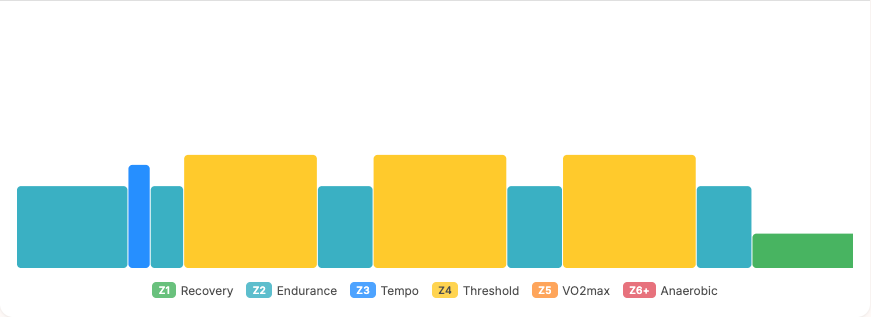
| Time | Duration | Power (% FTP) | Heart Rate | Cadence | Type |
|---|---|---|---|---|---|
| 0:00 | 10 min | 56–75% | ~65–72% max | Free | Warmup |
| 10:00 | 2 min | 75–90% | 72–80% max | Free | Ramp up |
| 12:00 | 3 min | 56–75% | ~68% max | Free | Warmup settle |
| 15:00 | 12 min | 88–93% | 80–87% max | 85–95 rpm | Sweet spot interval 1 |
| 27:00 | 5 min | 56–75% | ~70% max | Free | Recovery |
| 32:00 | 12 min | 88–93% | 80–87% max | 85–95 rpm | Sweet spot interval 2 |
| 44:00 | 5 min | 56–75% | ~70% max | Free | Recovery |
| 49:00 | 12 min | 88–93% | 80–87% max | 85–95 rpm | Sweet spot interval 3 |
| 61:00 | 5 min | 56–75% | ~70% max | Free | Recovery |
| 66:00 | 10 min | 0–55% | ~60% max | Free | Cooldown |
Total work time: 3 × 12 min = 36 minutes at sweet spot. TSS: 64. This is the right starting point if you are new to structured sweet spot training. Three 12-minute intervals at 88–93% FTP is demanding but very manageable with proper pacing. Heart rate should reach 80–87% of max within the first 3–4 minutes of each interval and hold relatively steady. If it keeps climbing above 88% of max, back your power off slightly — you are likely drifting into threshold territory.
Once this session feels controlled at the end of all three intervals, progress to the Sweet Spot 90min (3 × 18 minutes) or Sweet Spot 120min (4 × 18 minutes) for a more significant training stimulus.